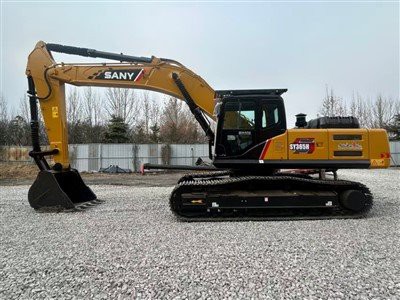
Excavators are indispensable heavy machinery in modern construction, widely used in earthmoving, mining, road building, and municipal projects. Their efficiency comes from the precise coordination of hydraulic systems and mechanical components.
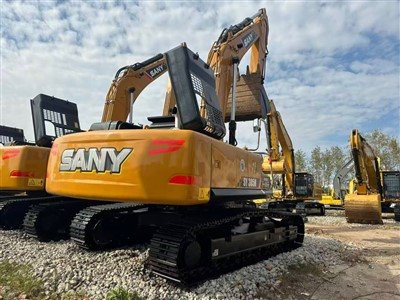
The core components of an excavator include the engine, hydraulic pump, hydraulic cylinders, rotating platform, boom, arm, and bucket. The engine provides power, driving the hydraulic pump to convert mechanical energy into hydraulic pressure. This hydraulic pressure flows through control valves to operate the cylinders, controlling the lifting, extending, and rotating movements of the boom, arm, and bucket.
The hydraulic system allows for precise control of operations, enabling rapid and smooth performance whether digging soil, moving ore, or handling delicate tasks. The rotating platform allows the cab and working attachments to rotate 360 degrees, enhancing operational flexibility.
Additionally, excavators are equipped with tracks or wheels to ensure stability and mobility across different terrains. Modern models also incorporate electronic controls and auxiliary systems, such as automated digging and load monitoring, further improving safety and efficiency.
Through the integration of hydraulic power and precise mechanical design, excavators deliver high-efficiency, flexible, and reliable performance, making them essential equipment in construction projects.