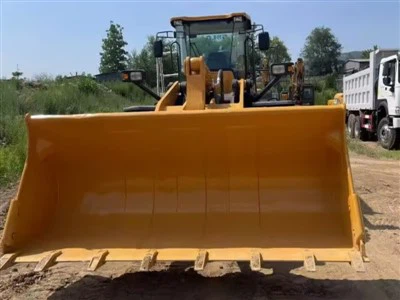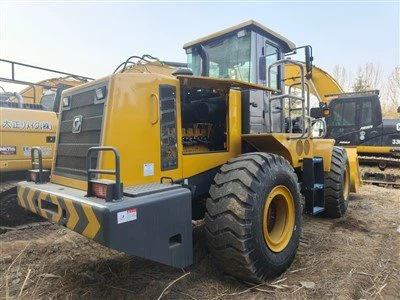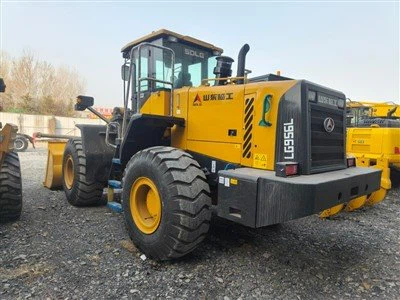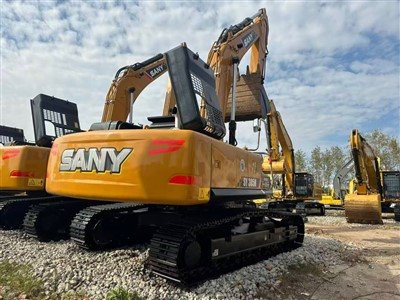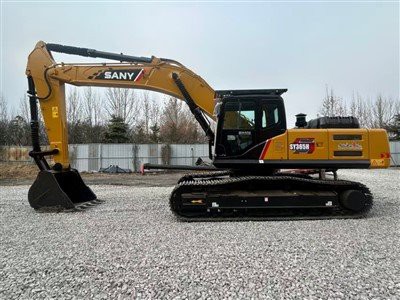
Wheel loaders are versatile construction machines primarily used for loading, transporting, and handling materials. Their functions can be summarized as follows:
Loading and Material Handling
Equipped with a front bucket, wheel loaders can efficiently load loose materials such as sand, gravel, coal, and soil. The hydraulic system allows precise control of the bucket's lift, tilt, and dumping angle, ensuring high productivity in material handling.
Stockpiling and Unloading
Wheel loaders can form uniform material piles on construction sites, ports, or mining areas. The bucket allows for accurate dumping and stacking, making them ideal for short-distance transport and organized stockpiling.
Multi-Functional Operations
By using various attachments such as grapples, snow plows, and pallet forks, wheel loaders can perform diverse tasks including snow removal, handling oversized items, and stacking, significantly expanding their operational capabilities.
Auxiliary Construction Tasks
Beyond loading, wheel loaders can assist in tasks like site cleaning, road maintenance, light excavation, and backfilling, providing flexible support for construction operations.
Operational and Management Features
Modern wheel loaders are equipped with intelligent control systems and ergonomic cabs, offering ease of operation while monitoring performance, fuel consumption, and machine health, thereby enhancing safety and management efficiency.
Conclusion
Wheel loaders combine high-efficiency material handling with versatile operational capabilities. They are essential in construction, mining, ports, and logistics, making them indispensable machines in the engineering equipment sector.